
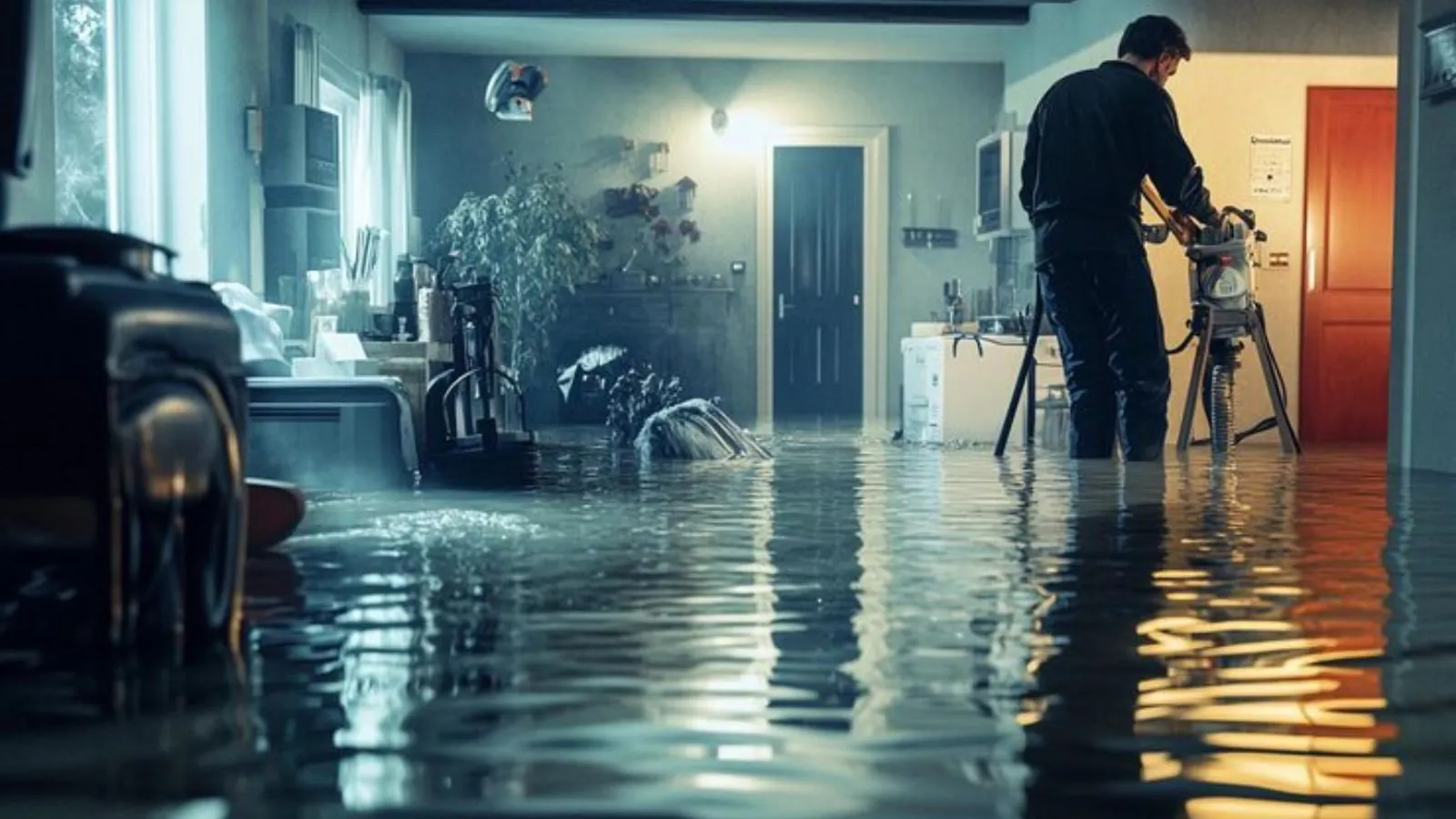
A moisture reading tells you how much water is inside a material, and it is the only reliable way to know whether a wet home is actually dry. Wet drywall can feel dry to the touch while the wall cavity behind it stays damp, and a floor that looks fine can hold water in the subfloor.
This guide explains what moisture meters measure, how a dry standard is set and what to ask for when a crew says your home is dry.
What a moisture meter measures
There are two common types. A pin meter pushes small probes into a material and reads electrical resistance, which changes as water content changes. A pinless meter scans the surface with a signal and reads moisture below it without leaving holes. Each is used for different materials, and good technicians use both.
A thermal camera does not measure moisture. It shows temperature differences, and wet areas often look cooler because water evaporating takes heat away. It points the technician to where to test, and the meter confirms.
Why the dry standard matters
Different materials have different normal readings. Drywall, wood framing, concrete and carpet pad each read on their own scales. So the crew takes a reference reading from an unaffected area made of the same material, and the goal is to bring the wet area down to that dry standard.
A material is dry when it matches its reference reading, not when it feels dry. That is the difference between a job that is truly finished and one that restarts in a month.
Reading a moisture log
| Column | What it tells you |
|---|---|
| Location | Which wall, floor or ceiling was tested |
| Material | What it is made of |
| Reading | The number at that spot and time |
| Dry standard | The reference reading from unaffected material |
| Date and time | Shows progress across days |
Why drying takes several days
Water leaves materials slowly, and dense materials such as hardwood and concrete release it slowest. Air movers push air across surfaces and dehumidifiers pull moisture out of the air, and the crew checks daily and moves equipment where readings are still high. The process is explained in more detail on the structural drying page.
What homeowners can ask for
- A written moisture log by room and by day.
- The dry standard used for each material.
- A final reading set before equipment is removed.
- Notes about any wall or floor that could not be dried in place.
Readings and your claim
A dated moisture log is a clear record for your insurer. It shows where the water went and how long the work took. Coverage still depends on the cause and the policy, so ask your insurer.
What a moisture meter measures
Moisture meters come in two common types. Pin meters push two small probes into a material and measure electrical resistance. Pinless meters scan the surface with a sensor and read the material beneath. Each reports a number, but the scale differs by material. Wood is read as a percentage of moisture content, while drywall and concrete often use a relative scale.
A single number means little on its own, which is why technicians compare it against a dry reading from the same material elsewhere in the home.
Readings of the air
A thermo-hygrometer measures temperature and relative humidity of the air. From those two numbers a technician can work out how much water vapor the air holds, often given in grains per pound. Dehumidifiers work on the air, so crews record air readings along with material readings. If the air stays humid, the materials cannot dry, no matter how many fans are running.
What thermal imaging shows
A thermal camera shows differences in surface temperature. Wet areas often look cooler because water evaporating draws heat away, so the camera can help find where to look. It does not measure moisture, though, so a meter reading confirms what the image suggests. Treat a thermal picture as a map and the meter as the proof.
What to ask for
Ask for the drying log. It should list dates, locations, the reading at each point, the dry reference, the equipment in place and the air conditions. When the final readings match the reference, the structure is dry, and that record is useful to keep for your insurer and for any later sale. See structural drying and dehumidification for how the process runs.
Napa notes: wet winters and closed windows
Napa receives about 31 inches of rain a year by the 1991 to 2020 normals at the county airport, and it falls mostly from October to April. During those months many homes stay closed up, so indoor humidity rises and drying takes more dehumidifier time than in the dry months.
If your house is in Westwood or near the foothills of American Canyon, the method does not change, but a winter job may need more days of monitoring. Ask the crew how the weather is being accounted for.
Frequently asked questions
Is a moisture meter reading always accurate?
Readings vary with material and meter type, so they are compared with a dry reference from the same material rather than treated as absolute.
Can I buy a moisture meter myself?
You can, and a basic meter helps you monitor a small area. Professionals use calibrated meters and interpret them across materials.
Do Napa winters make drying slower?
They can, since closed windows and humid air raise the dehumidification workload. Daily readings show whether the job is on track.
When can the equipment come out?
When readings in every tested spot match the dry standard for that material.