
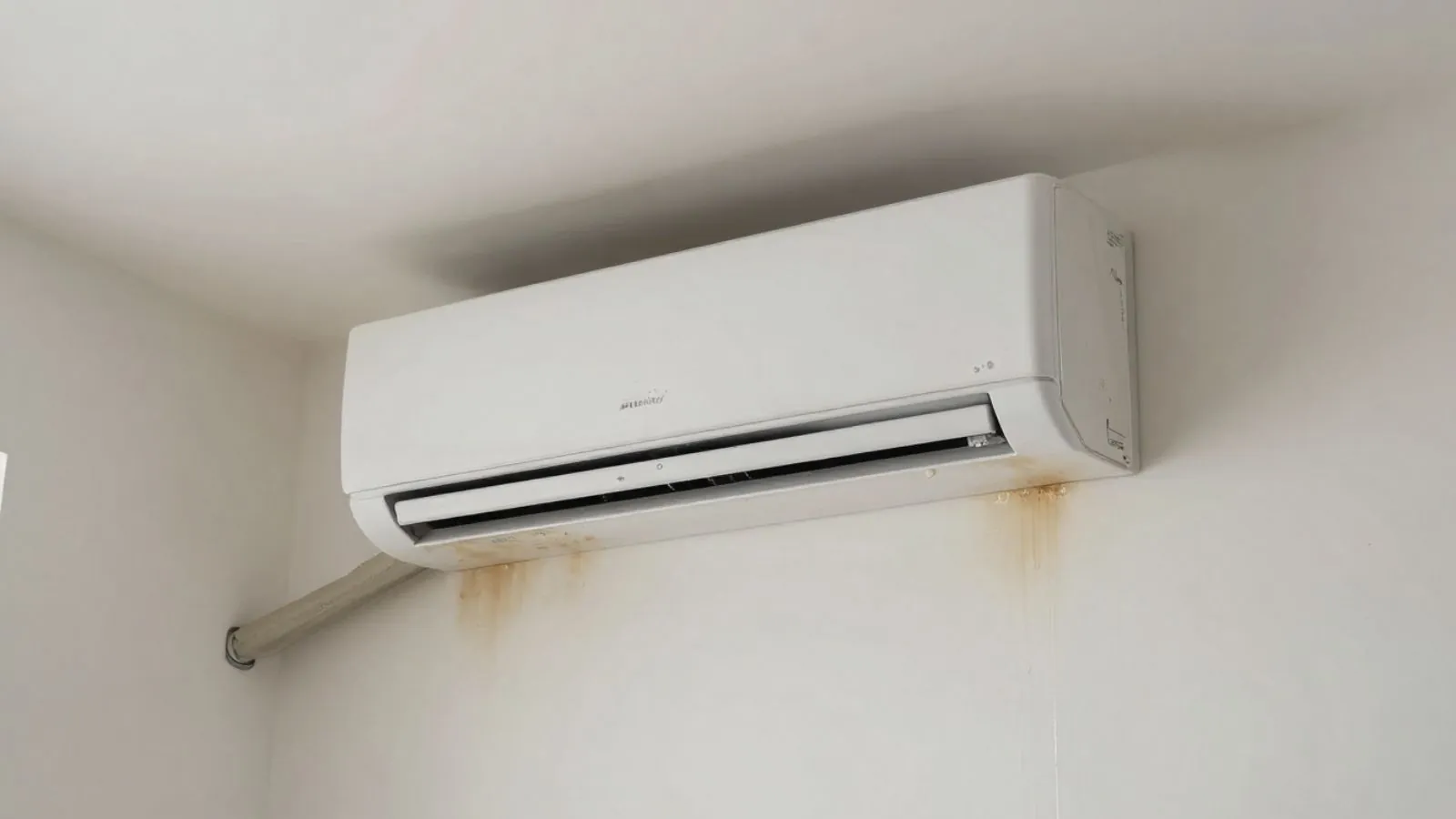
AC leak water damage repair in Napa, CA is the cleanup after an air conditioner drain line or pan overflows into a ceiling, wall or closet. Napa summers are warm and the record high of 114 degrees was set in 2022, so air conditioners work hard and condensate lines clog. Call (833) 521-1033, since the 24/7 line can arrange an assessment.
Turn off the system at the thermostat, then check the drain line and pan. If water is dripping from a ceiling, place a bucket under it and photograph the stain.
How an AC unit leaks
As air conditioners cool, they pull moisture from the air, which drips into a pan and drains through a line. If the line clogs or the pan rusts, water spills. It often leaks quietly into an attic or closet and appears as a ceiling stain later.
The ANSI/IICRC S500 standard is the published industry reference for professional water damage restoration, and a crew can explain how its plan follows it.
What this page covers
This page covers the water damage. An HVAC technician repairs the unit and clears the drain line. Do both, since a repaired ceiling will stain again if the drain stays blocked.
Signs of an AC leak
| Sign | Meaning |
|---|---|
| Stain near a vent or closet | Condensate overflow |
| Musty smell near the unit | Standing water |
| Water at the unit base | Clogged line or pan |
| Unit shuts off | Float switch triggered |
Cleanup and drying
A crew checks the ceiling, insulation and framing with a moisture meter. Wet insulation is removed and the cavity is dried. For ceiling repairs, see ceiling water damage repair. For attic or wall moisture, structural drying explains the process.
Prevent a repeat
Have the drain line cleared before the cooling season and check the pan. Ask your HVAC technician about a float switch. Insurance often covers sudden damage, but check your policy and ask your insurer.
Why air conditioners leak
An air conditioner removes humidity from the air, and that water leaves through a condensate drain line. When the line clogs with algae and debris, the drain pan overflows, or the pan itself rusts or cracks, water spills near the air handler.
A frozen evaporator coil that thaws can also release more water than the pan can carry. The air handler is often in an attic, a closet or a crawl space, so the leak can go unseen until a ceiling stain shows up.
Where the water ends up
Attic units drip onto the insulation and the ceiling below, closet units soak the floor and the wall, and crawl space units wet the subfloor and its insulation. Condensate has passed through a drain pan that is not sterile, so wet materials are handled with some care. Wet attic insulation slumps and stops insulating, which is a hidden cost of a slow leak.
What to do first
Switch the system off at the thermostat so it stops making more water. Place a bucket or towels under drips, and shut off power at the breaker if water is near the unit or its electrical connections and you can reach the panel while standing dry. Do not climb into a wet attic. If a ceiling is bulging, keep clear of it. Photograph the unit, the pan and any stains.
Cleanup and repair are different jobs
Cleanup dries the building and removes materials that cannot be saved. The cause is fixed by an HVAC technician, who clears the drain line, replaces a pan or adds a safety switch that shuts the system off when the pan fills.
Until the source is repaired, the leak can start again, so confirm the repair before the drying is finished. See ceiling water damage repair for what happens to stained and sagging ceilings.
Preventing a repeat
Condensate lines need periodic flushing, and the pan and any float switch should be checked as part of normal HVAC service. Watch for a musty smell near the unit, water in the pan, or a drain line that stops dripping outdoors when the system is running hard.
Napa summers can run hot, with a record high of 114 degrees in 2022, so systems work hardest in the months a clog is most likely to show up.
What affects the cost
AC leak damage is usually smaller than pipe bursts.
- Duration. How long it leaked.
- Insulation. Attic insulation.
- Ceiling. Drywall.
- Drying. Equipment days.
- HVAC repair. Separate.
Insurance coverage depends on the cause of the loss and the terms of your policy, so check your policy or ask your insurer. Want your real number? Call (833) 521-1033.
Frequently asked questions
Is an AC leak an emergency?
Usually not, but turn the unit off and stop the water, since a ceiling can fail.
Who fixes the drain line?
An HVAC technician.
Will insurance cover this?
Sudden damage often is. Ask your insurer.
Can I stain-block and paint?
Only after the source is fixed and the area is dry.