
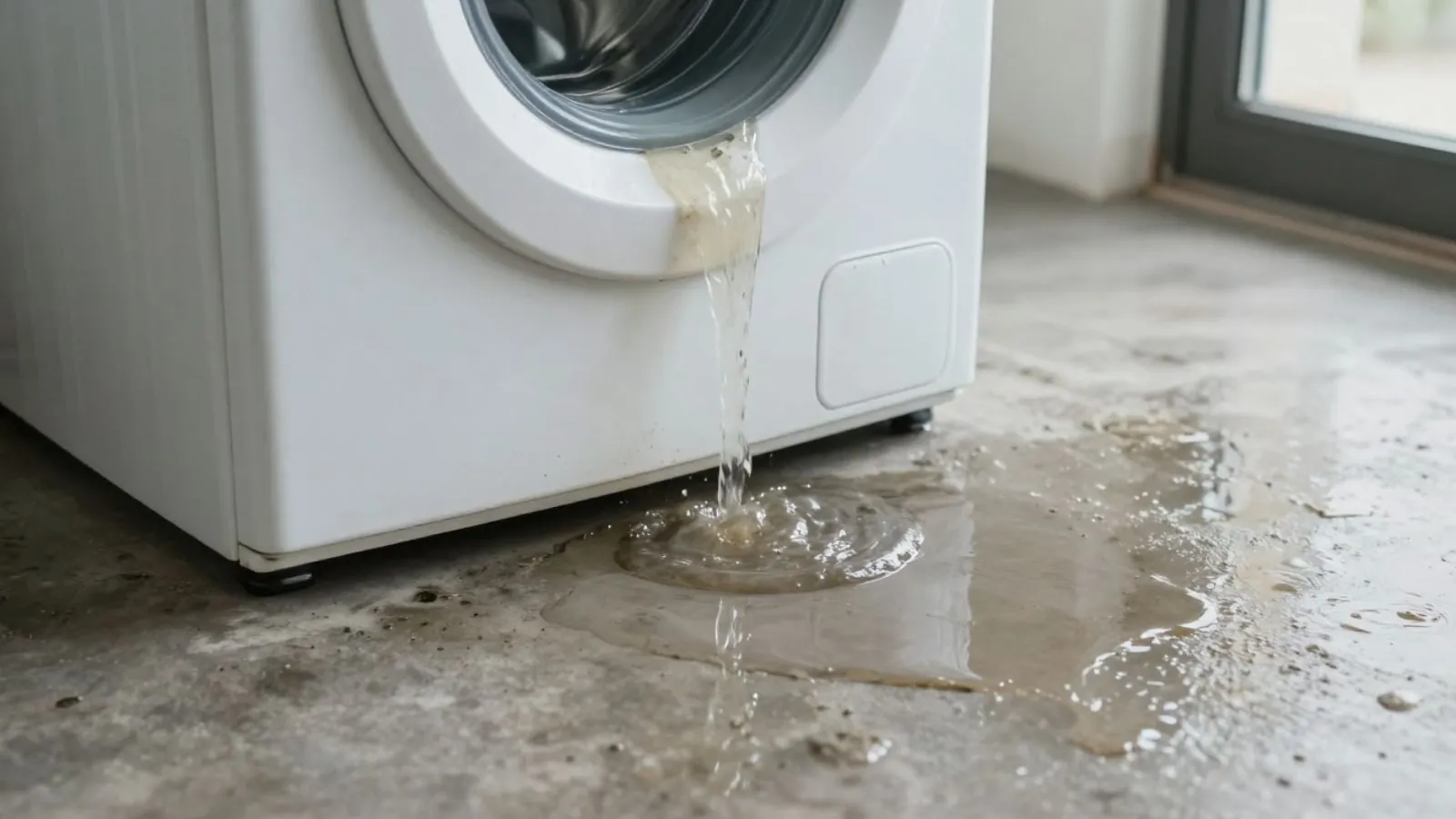
Emergency appliance leak water damage in Napa, CA is the cleanup after a washing machine, dishwasher or refrigerator line leaks into a home. These leaks are often slow and hidden, which makes them costly. Call (833) 521-1033 once the appliance is off, because the 24/7 line is answered at night and on weekends.
Turn off the appliance, then close the shut-off valve for its supply line. Unplug it only if the cord and outlet are dry. Lift items off the wet floor, photograph the appliance and the water, and keep the failed hose or part.
When an appliance leak is an emergency
A burst washing machine hose can release gallons per minute, while a dishwasher leak may run a little at a time for months. The first case is an emergency now, the second an emergency that has already waited. Either way, the water reaches subfloor and cabinets.
The ANSI/IICRC S500 standard is the published industry reference for professional water damage restoration, and a crew can explain how its plan follows it.
Electric shock risk
Appliances are plugged in. Do not unplug one while standing in water, and do not touch a wet cord. If the water reaches an outlet, stay out and call the utility.
Sources by appliance
| Appliance | Typical failure | First step |
|---|---|---|
| Washing machine | Hose or inlet valve | Close both supply valves |
| Dishwasher | Door seal, supply line, pump | Turn off power and supply |
| Refrigerator | Ice maker line, drain pan | Close the line valve |
| Water softener | Drain line, tank | Bypass and shut off |
Slow leaks and hidden damage
Slow leaks soak the subfloor and cabinet bases over weeks. A floor that feels soft or a baseboard that is damp suggests water has been there for a while. A moisture meter finds the extent. Kitchens have their own page, kitchen water damage restoration, with the cabinet details.
Napa housing and age of appliances
The 2020 Census counted 31,071 housing units in Napa, and about 44 percent of occupied homes were rented. Rental and owner-occupied homes alike have appliances with hoses and valves that age, and tenants should tell the landlord quickly. Replace rubber supply hoses with braided lines when you can.
The usual suspects
Dishwashers, washing machines, refrigerators with ice makers and water heater connections are common sources. Rubber supply hoses on washers age and can burst, and a clogged washer drain can overflow. A refrigerator line often leaks quietly behind the unit and under the floor. Because appliances sit against walls and under cabinets, the water frequently travels to places you cannot see from the front.
Slow leaks and hidden damage
A leak that has run for weeks is different from a burst hose. Slow leaks cause staining, swollen floor edges, a mildew odor and a soft subfloor, and mold can grow where materials stay damp. Pulling the appliance out, when it is safe, lets the crew see the floor and the wall behind it, and readings are taken along the baseboards and in the nearest cabinet.
If the leak ran for a long time, the insurance question also changes, since policies often treat gradual leakage differently from a sudden discharge.
Moving the appliance safely
Appliances are heavy and connected to water, power or gas. Shut off the water supply valve first and unplug the unit, and do not tilt a refrigerator or washer by yourself. If a gas line is attached, such as to a gas dryer, leave it to a qualified technician.
Take a photo of the model and serial label, because your insurer or the manufacturer may ask for it. Keep the failed hose or part, since it can show how the failure happened. If the leak reached the cabinets, see kitchen water damage for what that repair involves.
Cleanup and insurance
A crew extracts the water, dries the floor and checks the cabinets and walls. See structural drying for the drying process. Sudden appliance leaks are often covered for the resulting damage, though the appliance may not be. Ask your insurer, and keep the failed part.
What affects the cost
Appliance leaks vary with how long they ran.
- Duration. Minutes or months.
- Flooring. Tile, vinyl, wood or carpet.
- Cabinets. Swelling.
- Drying days. Equipment and readings.
- Appliance repair. Separate.
Insurance coverage depends on the cause of the loss and the terms of your policy, so check your policy or ask your insurer. Want your real number? Call (833) 521-1033.
Frequently asked questions
Do you handle appliance leak emergencies at night or on weekends in Napa?
Yes. Call (833) 521-1033 at any hour.
How do I know if the leak is old?
Soft floors, stains, musty smell and swollen cabinet bases suggest long-term moisture.
Should I keep the failed hose?
Yes. It can help show the cause for an insurer.
Who pays in a rental?
Depends on the lease and policies. Tell the landlord right away and document the damage.