
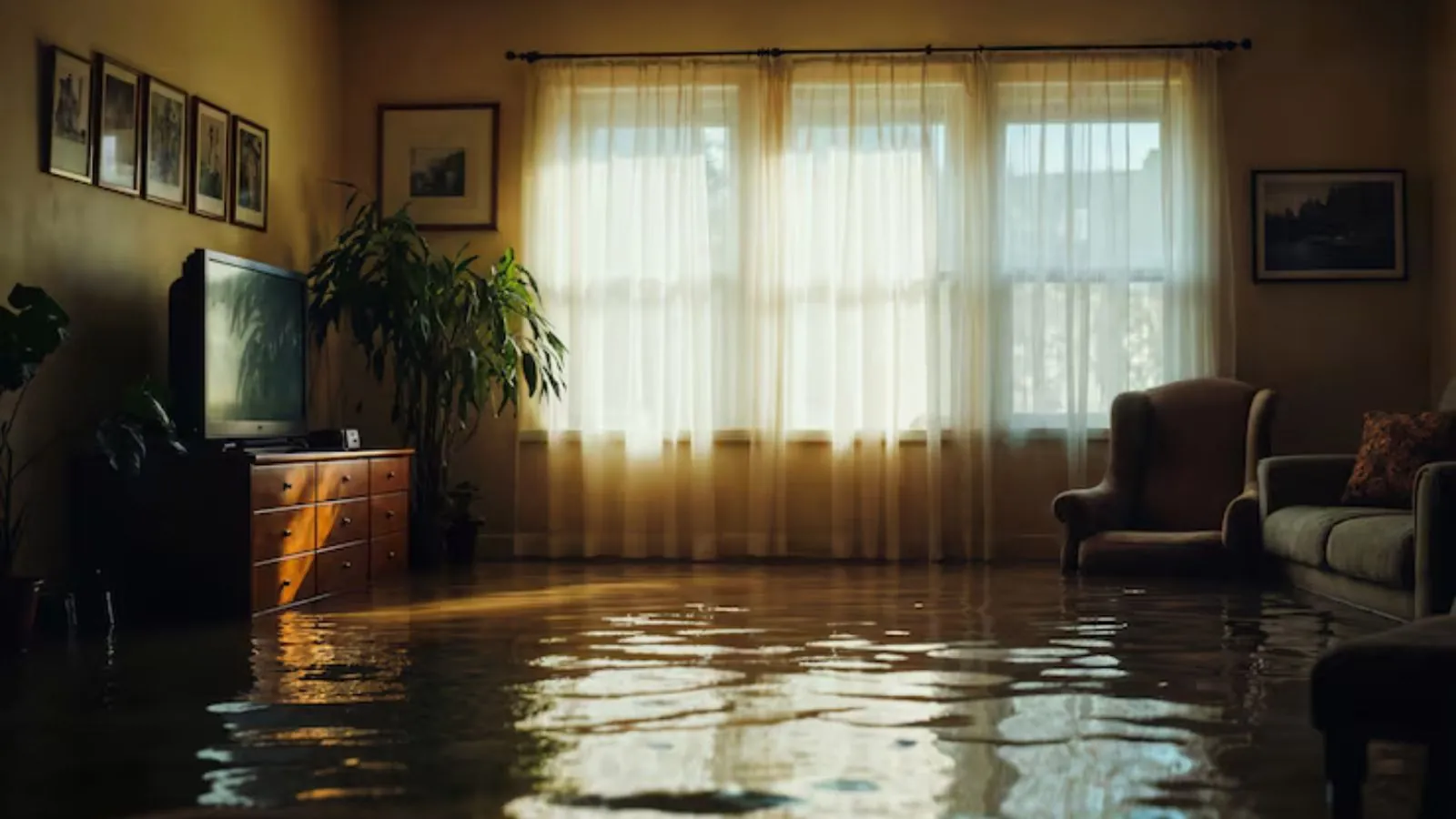
You can handle a small, clean spill yourself if it is caught within a few hours and has not reached walls or subfloor. Everything else needs professional equipment and meters, because hidden moisture is the reason a dry-looking room turns into a mold problem a few weeks later.
This guide gives you a simple test, a safe first response and the warning signs that mean you should stop and call.
The three questions
- Was the water clean, such as supply water or rain, and not sewage or flood water?
- Was it caught within a few hours, and on a surface that dries quickly?
- Is it contained to a small area that has not reached a wall, a cabinet base or a subfloor?
If all three are yes
Soak up the water with towels, run fans and open windows when it is dry outside, and run a dehumidifier. Lift furniture off wet carpet, and check the area again the next day. If a wall, baseboard or floor feels damp after a day, treat it as a bigger problem.
What you should not do
- Do not use a household vacuum on standing water.
- Do not stand in water near outlets or appliances.
- Do not heat a wet floor or wall with a heat gun, which can cause damage.
- Do not paint or seal over damp drywall.
- Do not assume it is dry because it feels dry.
Signs that you need a professional
| Sign | Why it matters |
|---|---|
| Water reached a wall or baseboard | Hidden cavity moisture |
| Carpet pad is soaked | Pad holds water for days |
| Water from sewage or a flood | Contamination |
| Water for more than a day | Mold risk rises |
| Large area or multiple rooms | Equipment is needed |
Why a professional adds value
A crew has pumps, extraction units, air movers, LGR dehumidifiers and meters. More important, it measures. A dry reading, not a feeling, is the evidence your insurer will want. See water extraction and structural drying for what that looks like.
Jobs a homeowner can reasonably handle
A small spill of clean water on a hard floor, a sink that dripped onto a cabinet floor, or a damp area that has been wet for a short time can often be handled with towels, a mop, fans and a rented dehumidifier. The key is that the water was clean, the area is small and nothing porous such as carpet pad, insulation or drywall has soaked through.
Signs you need a professional
- Water has been present for more than a day
- Drywall, insulation or carpet pad is wet
- The water came from a sewer, drain or outdoors
- A large area or more than one room is affected
- A ceiling is sagging or a wall feels soft
- There is a musty smell but you cannot see the source
Why dry on the surface is not dry
A floor can feel dry while the subfloor under it is wet. A wall can look fine while the cavity holds a saturated batt of insulation. Fans alone move moisture around and can raise the humidity of the whole house without removing any water. Without a meter, you cannot tell when drying is finished, and that is how problems return weeks later as stains, odor or mold.
The cost of waiting
Materials degrade the longer they stay wet. Wood swells, drywall softens and mold can begin to grow in the first day or two in the right conditions. A delay can turn a drying job into a removal and rebuild. If you are unsure which category your situation falls in, call (833) 521-1033 and describe what you see. The 24/7 line can help you decide.
For the full process, read about water extraction and structural drying.
If you decide to start drying yourself
If you handle a small clean water spill, move fast. Remove standing water with towels or a wet vacuum, lift rugs and small furniture off the floor, open cabinet doors and run a dehumidifier with fans pointed along the floor.
Keep the room closed so the dehumidifier works on that air. Check again the next day, and if anything still feels cool, damp or smells musty, stop and call someone with a moisture meter.
Napa notes: when it rains
Napa gets about 31 inches of rain a year by the 1991 to 2020 normals, mostly between October and April. In wet months a window left closed all day will not dry a damp room, so your DIY drying should include a dehumidifier. In Browns Valley and other areas, a roof leak during a storm is usually not a DIY job, since the water runs along framing.
If you are unsure where your main water valve is, the City of Napa Water Division can point you to the meter location for your address, and in American Canyon the city utility can do the same.
Frequently asked questions
Can I dry a wet carpet myself in Napa?
If the water was clean and the area is small, you can try. If the pad is soaked, it usually needs removal.
Is a box fan enough?
For a very small spill, maybe. For hidden moisture, a fan alone will not remove it from walls and floors.
How do I know the job is done?
A moisture meter reading that matches a dry reference.
When is waiting a mistake?
When water has reached walls, the pad or a subfloor. Mold risk rises the longer it stays wet.