
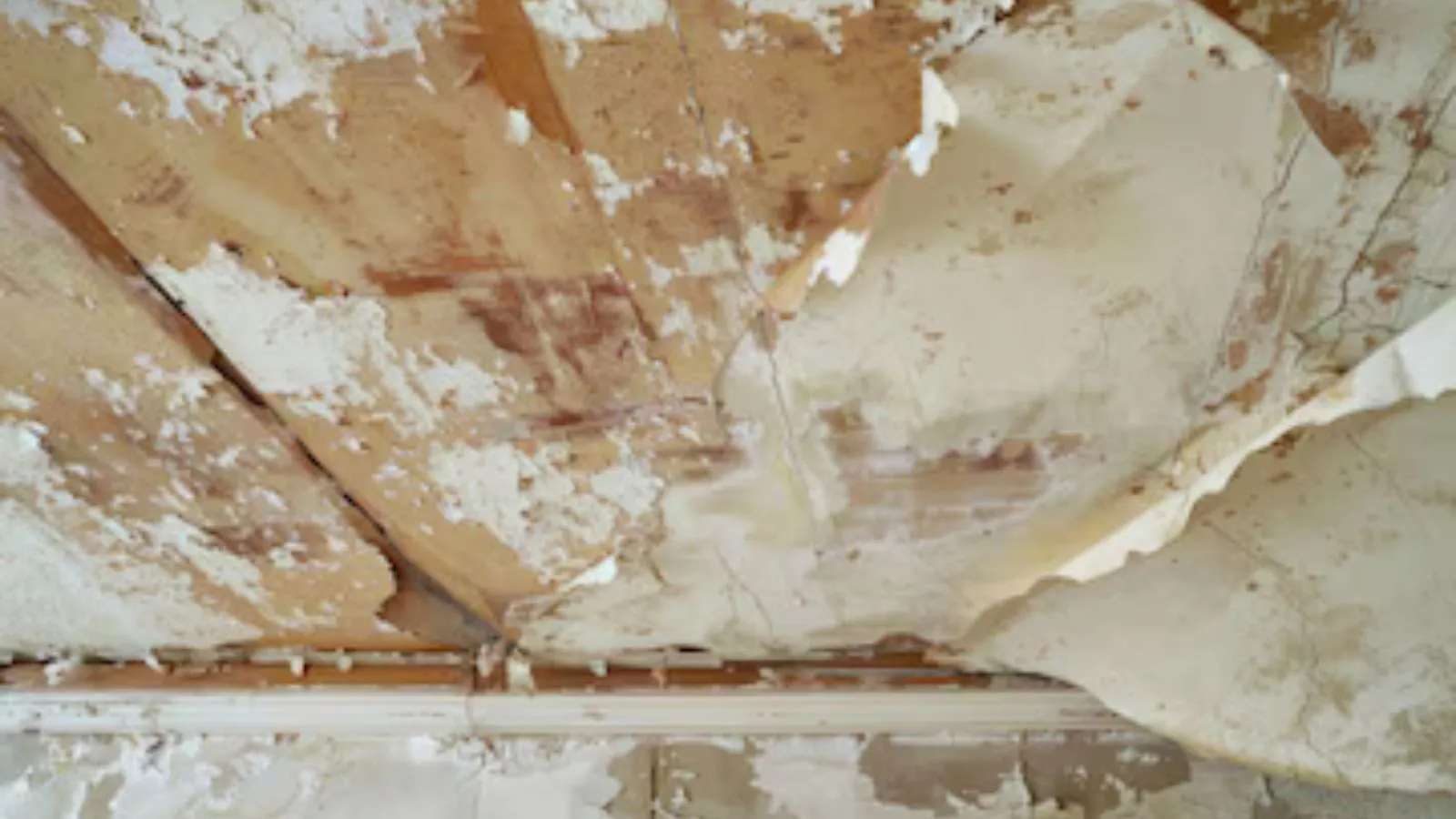
Homeowners insurance often covers water damage from a sudden and accidental event, but it rarely covers a flood and often excludes slow leaks that went unfixed. That one sentence answers most questions, and the rest of this guide explains what sits behind it so you can read your own policy with the right questions in mind.
Napa homeowners deal with every version of the problem, from a split supply line in a kitchen to rain pushed under flashing during a winter storm. The label on the cause decides which part of the policy applies, and that is why the cause matters as much as the damage.
Sudden and accidental versus gradual
Insurers draw a line between damage that happens suddenly and damage that develops over time. A burst pipe, a failed washing machine hose or a water heater that splits at the seam are sudden events. A pipe that weeps for six months behind a wall, or a roof that has leaked for several winters, looks like gradual damage.
Policies are written in different words, so read the exact language about sudden and accidental discharge of water, and about wear, tear and deterioration. If your situation sits near the line, dated photos and moisture readings help show when the damage started.
Flood is a different policy
The California Department of Insurance says standard homeowners, renters and commercial policies typically exclude flood, mudslide and similar events. Flood coverage is usually bought as a separate policy. That means rising water from a creek or river, or surface runoff entering at ground level, may fall outside your homeowners policy even though the damage looks the same as a burst pipe.
The same Department notes that a policy may still pay for water damage from wind-driven rain during a storm, and for damage from fallen trees. Those are the places where the exact policy wording matters most.
What is usually included, and what is not
| Cause | Often covered | Often excluded |
|---|---|---|
| Burst supply line | Water damage to the home | The pipe itself |
| Appliance hose failure | Resulting damage | The appliance |
| Rain through a storm opening | Possibly, if wind-driven | Long-neglected roof |
| Rising flood water | Not usually | Needs separate flood policy |
| Slow leak over months | Sometimes limited | Often excluded |
Questions to ask your insurer
- Which provision applies to this cause of loss?
- What is my deductible for water damage?
- Does my policy cover the cost of drying and mitigation work separately from repairs?
- Is there a limit for mold or a limit for ongoing leaks?
- What documents do you need from me?
Why mitigation helps your claim
Most policies expect you to limit further damage. Prompt extraction and drying show that you acted reasonably, and moisture readings record the extent of the loss. The water extraction page explains the first step, and structural drying explains how readings show the job is complete.
No restoration company can promise that a claim will be approved. What a good scope does is describe the damage clearly so your insurer can decide.
Documents that help your claim
Insurers want proof of when and how the loss happened. Keep dated photos or video of the damage and the source, the plumber's or repair invoice, a list of damaged items with their approximate age and value, and receipts for any emergency steps you paid for.
Keep a log of every call with the date, the name of the person you spoke to and what was said. Ask for the claim number in writing and keep all emails in one folder.
Reasonable steps to limit the damage
Most policies expect you to take reasonable steps to prevent further damage, such as shutting off water, moving belongings and starting water extraction and drying. Costs for those reasonable steps are commonly part of a claim, but check your policy wording and tell your adjuster what you are doing before you sign a large contract.
Avoid discarding damaged materials until the adjuster has seen them or you have photographed them thoroughly.
When the adjuster and the contractor disagree
It is common for an adjuster's scope and a contractor's scope to differ. Ask both to put the differences in writing, line by line, and send your supporting moisture readings and photos. The California Department of Insurance consumer hotline, 1-800-927-4357, can answer questions about the claims process.
Napa notes: flood history and your policy
The Napa River has flooded seriously more than once, with high water recorded in 1986, 1995, 1997 and 2005, and voters approved the Napa River Flood Project sales tax in March 1998. Much of the work was completed by 2015 according to public summaries. A flood project lowers risk, but it does not change what a standard homeowners policy covers.
You can look up your address on the FEMA Flood Map Service Center, and you can ask your agent about separate flood coverage. In nearby places such as American Canyon or in neighborhoods like Alta Heights, the question is the same: check your policy and ask your insurer.
Frequently asked questions
Does Napa homeowners insurance cover damage from the Napa River flooding?
Standard homeowners policies typically exclude flood, according to the California Department of Insurance. Flood coverage is usually a separate policy, so ask your agent whether you have one.
Is a burst pipe in a Napa home covered?
The resulting water damage is often covered when the burst is sudden and accidental, while the pipe itself may not be. Read the sudden and accidental language in your policy.
Should I wait for the adjuster before cleaning up?
Do not wait to stop the damage. Take photos, make temporary repairs and keep receipts, then wait for the adjuster before permanent repairs.
Does insurance pay for water damage from rain through the roof?
It may, if the rain was wind-driven during a storm, but a long-neglected roof is often excluded. Ask your insurer which provision applies.